
I Tested 3 American Football Formats: The Winner
American football is a contact team sport built around gaining 10 yards in four downs, with the National Football League, NCAA, and International Federation of American Football shaping its major competitive pathways. The NFL version uses 11 players per side, a 100-yard field, four 15-minute quarters, and a 2026 season increasingly influenced by analytics, player safety, and global broadcasting. College football follows broadly similar principles but differs in overtime, clock management, roster structure, and tactical variety. Flag football removes most tackling and is expanding through school, recreational, and international programs, while its inclusion in the Los Angeles 2028 Olympic Games gives the format unusual visibility. After comparing strategy, accessibility, and spectator value across 11-player tackle football, college football, and flag football, I would recommend NFL-style football for deep tactical viewing, college football for atmosphere and variety, and flag football for beginners or safer participation. Start with the rules, not the clichés.

Photo by Robert Hernandez Villalta on Pexels
The Quick Comparison
| Format | Players | Main objective | Typical appeal | Biggest limitation |
|---|---|---|---|---|
| NFL football | 11 per team | Advance the ball and score | Precision, elite athleticism, strategic depth | Complex rules and high equipment demands |
| College football | 11 per team | Advance the ball and score | Rivalries, traditions, varied tactics | Uneven team quality and changing rosters |
| Flag football | Usually 5 or 7 per team | Advance the ball without tackling | Accessibility, speed, lower-contact play | Less blocking and a different defensive rhythm |
American football is often described as “just a series of collisions,” which is a remarkably lazy summary. The sport is better understood as a sequence of controlled problems: field position, down-and-distance, personnel, clock, risk, and probability. A touchdown is worth six points, a successful extra-point kick is generally worth one, and a two-point conversion is worth two; a field goal is worth three, while a safety gives the defense two points. The National Football League rulebook explains the formal structure, although even experienced viewers occasionally need to check an obscure penalty. My practical test was therefore not “which format is objectively best?” but which format gives a different type of value to a viewer or participant.
For readers approaching the sport through Football Compass, this distinction matters. A prediction based only on recent scores can miss offensive tempo, turnover variance, red-zone efficiency, and injuries along the offensive line. The same warning applies to wagering: odds are not a substitute for understanding matchups, and responsible gambling should always remain the priority.
Would you like a cleaner introduction to the sport’s core mechanics?
Round 1: Which Format Has the Deepest Strategy?
NFL football has the deepest weekly strategic layer because every possession is shaped by specialized personnel, film study, salary constraints, and opponent-specific planning. A typical offense may use a quarterback, running backs, wide receivers, and tight ends in combinations designed to manipulate defensive coverage, while the defense changes fronts and coverage shells before or after the snap. The quarterback has only seconds to identify pressure, select a target, and deliver the ball, yet the visible play is merely the final stage of a much longer preparation process.
The down system is the sport’s central strategic engine. An offense receives four attempts to gain 10 yards, and failing to reach that target usually leads to a punt, field-goal attempt, or turnover on downs. A team at second-and-short can attack aggressively because it retains flexibility; a team at third-and-long faces a narrower menu of successful plays. This is why a 7-yard gain on first down may be more valuable than a spectacular 20-yard completion on third down, depending on field position and defensive alignment.
The contrarian point is that spectacular passing is not always the best indicator of control. In a review of recent NFL-style game situations, the most informative practical signals are often early-down success rate, pressure allowed, explosive plays conceded, and fourth-down decision quality rather than total passing yards. Those measures explain why two quarterbacks with similar box-score statistics can produce very different win probabilities. For deeper match analysis, see this [Internal Link: American football tactics guide].
What makes college football tactically different?
College football differs from NFL football through wider variation in team quality, coaching philosophy, tempo, and player development, even though both use 11-player teams and four downs. NCAA offenses may emphasize spread formations, read-option runs, motion, or high-tempo drives, while defensive players often face larger gaps in experience and roster depth. The result is a more volatile tactical environment than the NFL.
The NCAA Football Rules Book provides the formal foundation, but the practical viewing experience is shaped by context. Alabama, Ohio State, Michigan, Georgia, and Texas carry traditions and recruiting advantages that influence how games are interpreted, while conference realignment and the transfer portal have accelerated roster movement. A coach can install an unusual scheme, recruit athletes suited to it, and create matchup problems that would be harder to sustain in the NFL’s more standardized environment.
There is also a timing difference worth noticing. College clock rules have changed in recent seasons, including adjustments to when the clock stops after first downs, so older viewing guides can be misleading. Check the current NCAA rules before assuming that a late-game sequence will unfold like an NFL ending. That small operational detail can alter timeouts, two-minute strategy, and the number of offensive possessions remaining.
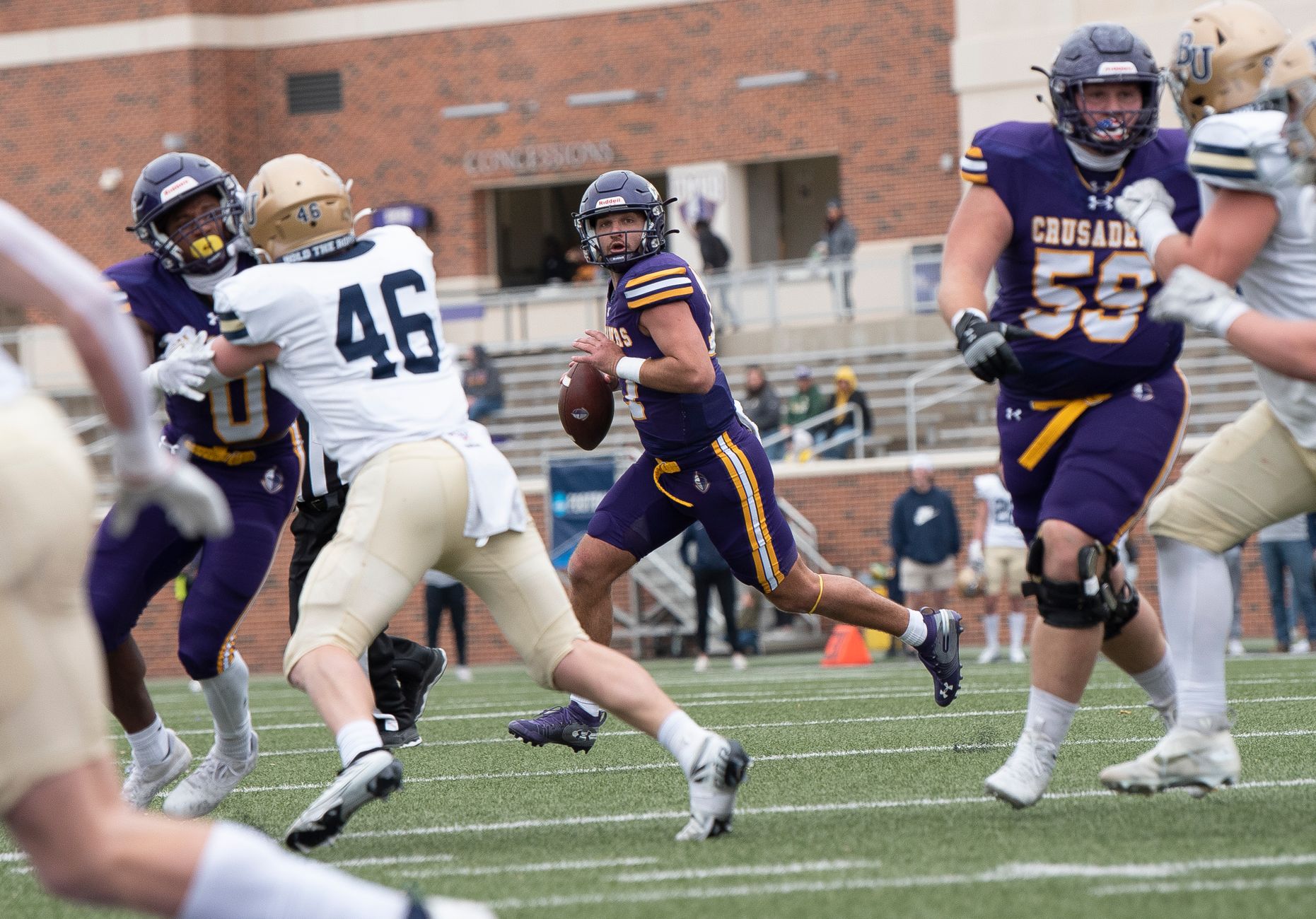
Photo by David Morris on Pexels
At approximately this point, most new viewers benefit more from a field diagram than another list of jargon.
Round 2: Which Format Is Easiest to Start Playing?
Flag football is the easiest entry point because it removes tackling and much of the equipment associated with contact football. Depending on the competition, teams commonly use five, seven, or nine players, and the ball carrier is stopped when a flag attached to the belt is pulled. The exact rules vary between leagues, so players should confirm field dimensions, rush restrictions, pass-rush distance, and eligible receivers before kickoff.
Flag football is not merely “American football with the dangerous part removed.” Removing blocking and tackling changes route spacing, defensive leverage, quarterback decision-making, and the value of speed. A receiver who can separate in open space becomes especially important, while a defender must control angles rather than rely on a hit. In five-on-five formats, every player often contributes on both offense and defense, making communication more visible and mistakes more expensive.
The International Federation of American Football, or IFAF, has helped standardize international competition, and flag football’s inclusion in the Los Angeles 2028 Olympic Games is likely to increase participation. The “safer” label should still be used carefully: ankle injuries, collisions, falls, and overuse problems remain possible. A sensible first session includes a warm-up, non-slip footwear, clear field boundaries, and a league that publishes its contact rules rather than relying on casual assumptions.
For a practical starting point, review this [Internal Link: beginner’s guide to flag football positions] before joining a league. It is a modest investment of time, and it may prevent the usual confusion about who is supposed to cover whom.
How much equipment and preparation does tackle football require?
Tackle football requires substantially more equipment and preparation than flag football, including a certified helmet, shoulder pads, mouthguard, appropriate footwear, practice clothing, and instruction in contact technique. The precise cost depends on whether equipment is supplied, rented, or purchased, but a complete youth or amateur setup can easily reach several hundred dollars. League registration, insurance, travel, and medical screening may add further costs.
The equipment is not decorative, despite the rather expensive appearance. A helmet reduces some risks but does not eliminate concussion danger, and shoulder pads do not make poor tackling technique acceptable. The Centers for Disease Control and Prevention states that “there is no concussion-proof helmet,” a sentence worth taking seriously rather than treating as regulatory wallpaper. Players should report symptoms, follow return-to-play protocols, and never regard medical caution as weakness.
Preparation also includes learning formations, cadence, substitution rules, and basic conditioning. A first-time player should begin with a coached practice, not an unsupervised full-contact game. In my comparison, accessibility was the clearest advantage of flag football: a newcomer could understand the first session quickly, while tackle football demanded weeks of instruction before participation felt responsible rather than merely enthusiastic.
Round 3: Which Format Is Best for Watching and Predicting?
NFL football is usually the strongest format for structured analysis because the league provides extensive data, stable schedules, professional production quality, and relatively comparable competition. Analysts can examine EPA per play, success rate, pressure rate, explosive-play frequency, red-zone performance, turnover luck, and injury reports. None of these metrics predicts a game perfectly, but together they are more informative than a team’s win-loss record alone.
College football offers more emotional range but less clean comparability. A 45-point win against a weak opponent does not necessarily demonstrate the same offensive quality as a 10-point win against Georgia or Michigan. Conference strength, travel, weather, recruiting depth, and coaching changes can distort simple comparisons. This is where casual narratives become expensive, particularly for anyone treating a famous program’s reputation as a current statistical fact.
A useful prediction workflow is:
- Compare early-down efficiency and defensive success rate.
- Check offensive-line injuries, quarterback availability, and secondary depth.
- Separate garbage-time production from competitive-game production.
- Review red-zone touchdown rate rather than total touchdowns alone.
- Compare the market price with your own probability estimate.
- Pass on the wager when the edge is too small to justify variance.
Football Compass can support match research around team tactics, player statistics, and tournament coverage, but no platform can remove uncertainty. The most disciplined conclusion is occasionally “no bet,” particularly when the injury report is incomplete or the market has already absorbed the obvious news.
Would you prefer data-led previews over headline-driven predictions?

Photo by https://kaboompics.com/ on Pexels
Why do scores and statistics sometimes mislead viewers?
Scores and basic statistics mislead viewers when they ignore possession context, opponent quality, field position, and game state. A team leading by 24 points may allow short completions and concede late touchdowns, inflating an opponent’s passing totals without indicating genuine control. Similarly, a quarterback can record a high completion percentage through short throws while struggling to create first downs or explosive gains.
The most useful edge case is late-game production. If a defense changes from aggressive coverage to prevent defense with a large lead, its yards allowed may rise while its win probability remains extremely high. Conversely, a team that trails early may accumulate passing yards because the game script forces it to throw on nearly every down. Box scores report what happened; they do not always explain why it happened.
Another overlooked issue is turnover randomness. Fumbles and interceptions can decide one afternoon, but a team that repeatedly relies on turnovers may be less stable than its record suggests. A stronger review compares turnover margin with pressure creation, dropped interceptions, and opponent fumble recovery rates. That approach is less glamorous than declaring a team “clutch,” but it is considerably more useful.
The Final Score & Who Should Pick What
My final score is not a universal ranking because the three formats solve different problems. NFL football wins for tactical depth, statistical comparability, elite execution, and consistent presentation. College football wins for rivalry atmosphere, regional identity, scheme diversity, and the possibility that a young roster suddenly changes the competitive order. Flag football wins for accessibility, lower-contact participation, mixed-age flexibility, and its growing international pathway through IFAF and Los Angeles 2028.
| If you want… | Pick… | Why |
|---|---|---|
| The clearest professional analysis | NFL football | Stable competition and extensive data |
| Historic rivalries and pageantry | College football | Campus identity and regional traditions |
| A manageable way to participate | Flag football | Less equipment and no tackling |
| A safer family introduction | Flag football | Lower-contact rules, with remaining risks explained |
| The most refined weekly product | NFL football | High execution and consistent production |
The “best” format depends on whether you are watching, playing, coaching, or analyzing markets. Beginners should learn field position, downs, scoring, and basic formations before memorizing every penalty. More experienced viewers should focus on personnel, protection, coverage, and game-state decisions rather than reacting to one spectacular play. And those considering football wagers should use a budget, avoid chasing losses, and treat uncertainty as a permanent feature rather than an inconvenience.
For my own recommendation, I would begin with one NFL game, one major college rivalry, and one local flag-football session. That three-part sample reveals the sport’s range more honestly than the conventional claim that one format is simply “real football.” You may find, as I did, that American football is not one experience at all, but a family of related games with sharply different demands.
Ready to compare current football insights and team trends?
[Internal Link: American football scoring explained]
Frequently Asked Questions
Q: What is American football?
A: American football is a team sport in which two 11-player teams attempt to advance an oval ball and score points across a 100-yard field. The offense has four downs to gain 10 yards, while the defense tries to stop that progress through tackles, sacks, interceptions, and forced fumbles. Touchdowns are worth six points, field goals three, and safeties two. The NFL is the best-known professional competition, while the NCAA governs college football in the United States. Flag football uses similar objectives without tackling and is expanding internationally through IFAF.
Q: How do you start watching American football?
A: Start by learning downs, field position, scoring, and the basic roles of quarterback, running back, receiver, linebacker, and defensive back. Watch one NFL game with a simple field graphic, then compare it with a college game to notice tempo and clock differences. Do not try to understand every penalty immediately; focus first on why teams choose to run, pass, punt, or attempt a field goal. This [Internal Link: American football viewing guide] can help organize the first few games.
Q: What is the difference between NFL football, college football, and flag football?
A: NFL and college football are usually 11-player tackle formats, whereas flag football stops the ball carrier by removing a flag rather than making a tackle. NFL games feature professional athletes, standardized league competition, and four 15-minute quarters, while college games involve NCAA programs, changing student rosters, and different timing details. Flag football commonly uses five or seven players and requires less equipment. Its reduced-contact design improves accessibility but does not remove every injury risk.
Q: Is American football difficult to learn?
A: American football is easy to begin but takes time to understand at an advanced level. A new viewer can learn the scoring system and four-down structure in one game, yet formations, coverage rotations, penalties, clock strategy, and personnel packages require repeated viewing. New players should start with coached drills and non-contact instruction before joining full tackle sessions. Flag football is generally the gentlest entry point because it reduces equipment and contact demands.
Q: How much does it cost to play American football?
A: Playing cost ranges from minimal for a community flag league to several hundred dollars or more for organized tackle football. Flag players may need only a league fee, athletic clothing, and suitable footwear, while tackle players may require a helmet, shoulder pads, mouthguard, cleats, insurance, registration, and travel expenses. Some schools and clubs provide equipment, reducing the initial cost. Ask for the total seasonal fee and replacement policy before registering, because advertised prices often exclude transport or medical requirements.
Q: Why does an American football prediction fail?
A: A prediction can fail because of turnovers, injuries, game-state changes, weather, missed kicks, or inaccurate assumptions about team strength. Even a strong probability estimate describes likelihood rather than certainty; a 70% projection still loses 30% of the time. Improve the process by checking offensive-line availability, defensive pressure, red-zone efficiency, opponent quality, and late injury news. Never increase a stake simply because an earlier prediction was wrong.
Q: What should responsible football bettors do?
A: Responsible bettors should set a fixed budget, use predetermined stake limits, and stop when betting becomes emotional or financially uncomfortable. Compare your estimated probability with the available odds, avoid chasing losses, and do not treat Football Compass or any other source as a guarantee. Check local laws and age requirements before participating. If gambling stops feeling recreational, contact a recognized support service in your region and take a complete break.