
Before You Bet, Read This 2026 World Cup Breakdown
The 2026 FIFA World Cup will be the first tournament staged across Canada, Mexico, and the United States, featuring 48 teams and 104 matches from June 11 to July 19, 2026. Football Compass provides match predictions, tactical analysis, player statistics, and responsible tournament coverage for fans following the competition across North America. Kansas City is one of 16 host cities, with six matches scheduled at GEHA Field at Arrowhead Stadium, while the FIFA Fan Festival is designed to bring supporters together beyond the stadium. The expanded format creates more fixtures, longer travel routes, and unusual scheduling variables that can influence team performance. Before assessing a match, check the confirmed venue, squad news, rest period, and official competition rules rather than relying on fashionable opinions. A careful reader may find that the most valuable edge is not a dramatic prediction, but accurate context.
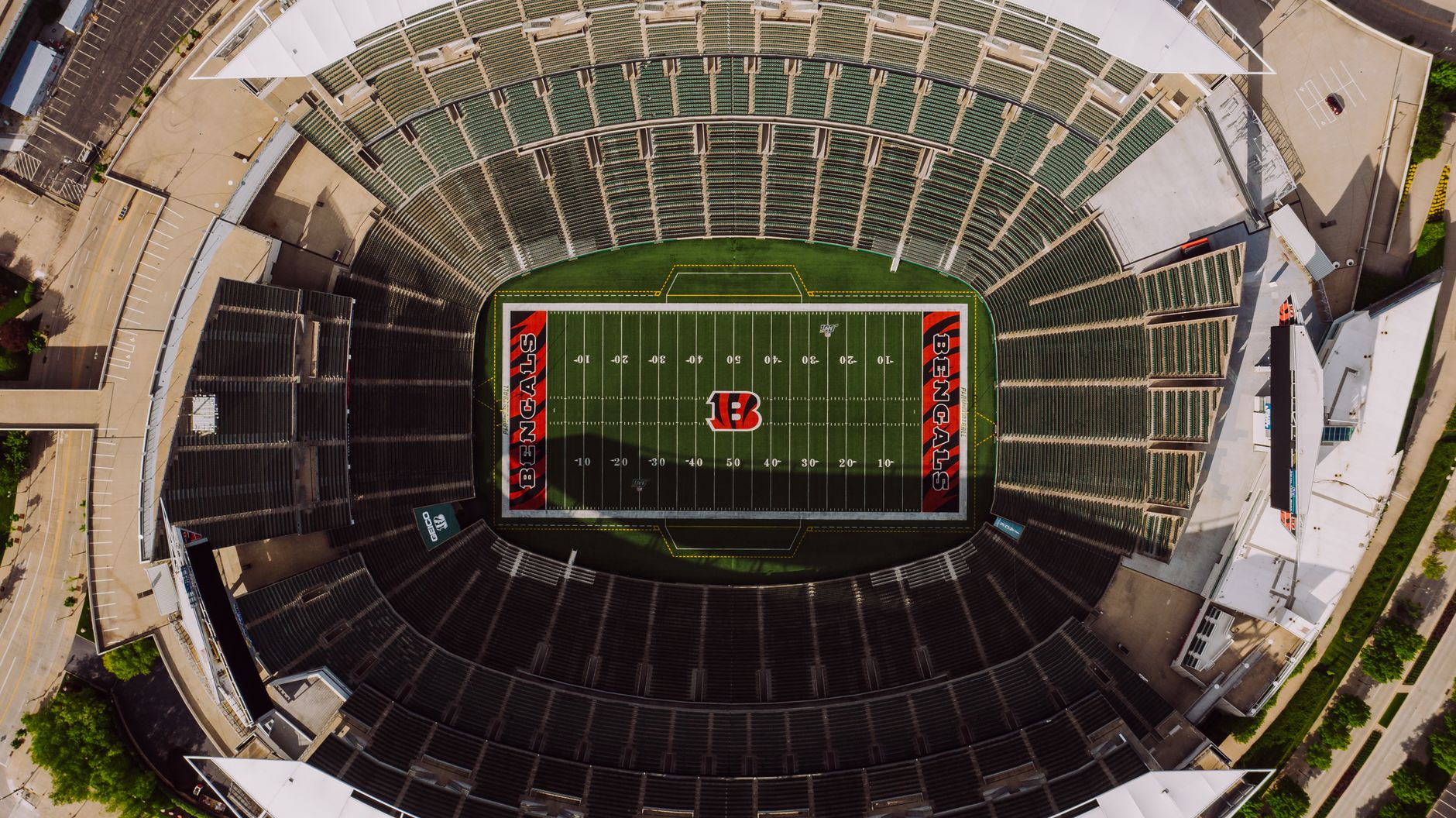
Photo by K on Pexels
The 2026 World Cup football tournament deserves a little more scrutiny than the usual parade of slogans about “the biggest ever.” FIFA has confirmed a genuinely larger event: 48 national teams will compete, compared with 32 at Qatar 2022, and the tournament will move through three countries spanning several time zones. That matters to anyone studying fixtures, tactical patterns, player markets, or match predictions, because travel and recovery become less decorative details and more measurable football factors.
Kansas City, in particular, offers an interesting case. The city has branded itself the “Soccer Capital of America,” yet its World Cup relevance is not merely promotional. The region is scheduled to host six matches, and the local program includes the FIFA Fan Festival, cultural events, food, entertainment, and public viewing areas. Football Compass approaches this environment with some restraint: the loudest claim is rarely the most useful one. For match-focused readers, the sensible starting point is to separate confirmed information from assumptions, then track changes as the tournament approaches.
Want a calmer starting point for tournament research? Explore the coverage that Football Compass is building around the competition.
Step 1: What should you confirm before analysing 2026 World Cup football?
Before analysing 2026 World Cup football, confirm the official fixture, venue, kickoff time, competition format, and current squad information. FIFA’s 48-team structure produces 12 groups of four, with the top two teams and the eight best third-placed teams advancing to a 32-team knockout bracket. These details should anchor every prediction.
The first practical mistake is treating a tournament fixture as though it were an ordinary domestic match. A club side may travel a few hundred kilometres between league games; a national team in the United States, Mexico, or Canada may face a very different climate, pitch surface, and recovery routine. FIFA’s official World Cup 2026 overview is therefore more valuable than a recycled social-media graphic, especially when kickoff times or venues change.
A useful verification checklist is:
- Confirm the match on FIFA’s official schedule rather than an unofficial fixture page.
- Identify the stadium, city, local time zone, and expected weather conditions.
- Check squad announcements, injuries, suspensions, and late replacements.
- Compare each team’s recent competitive matches with its friendly results.
- Record the number of rest days and the distance from the previous venue.
The last point is unusually important in 2026. A team moving between Vancouver, Seattle, Dallas, Atlanta, Miami, and Mexico City may face a different preparation problem from a team remaining within one regional cluster. That does not automatically make travel a winning angle, naturally, but ignoring it would be strangely confident.
To understand the host-city setting more fully, consult our [Internal Link: 2026 World Cup host cities guide], particularly for venue geography and matchday conditions.
Step 2: How can you read the expanded 48-team format?
The expanded format contains 12 groups of four teams, and the leading 32 nations progress to the knockout stage. Each team still plays three group matches, but the additional qualification route through the eight best third-placed teams makes goal difference, goals scored, and late-match game management more consequential than many casual previews suggest.
The format was approved by FIFA after changes to the initial 16-group proposal. According to the FIFA Council tournament format announcement, the 2026 competition will include 104 matches. FIFA described the expansion as a way to provide “more meaningful matches” for participating nations, although the football consequences are more complicated than that polished phrase suggests.
In group-stage analysis, consider three layers:
- Qualification pressure: A third-place team may remain alive, but cannot assume that two points will be enough.
- Goal difference: A late defensive collapse or a final attacking push may have real ranking value.
- Rotation: Coaches may manage minutes differently when a team has two or three days between fixtures.
The traditional assumption that a team must win its first match to have a realistic chance is not universally sound. In a four-team group, a controlled draw against a strong opponent can be useful if the remaining fixtures are favourable. Conversely, a narrow victory may prove insufficient if another group rival collects a large-margin result. Readers who prefer clean narratives may find this inconvenient; football, regrettably, has not agreed to simplify itself for them.
A further complication is bracket positioning. Finishing first may offer a different route from finishing second, but the opponent quality depends on results elsewhere. Football Compass therefore treats qualification probability, expected points, and potential knockout paths as separate questions rather than compressing them into one “power ranking.”
Photo by Anat Landa on Pexels
Step 3: Why do venue, travel, and climate matter in North America?
Venue, travel, and climate matter because the 2026 World Cup crosses three countries and a wide range of environments, from Mexico City’s high altitude to hot, humid summer conditions in several United States host cities. The effect is not identical for every squad, but rest, hydration, transport logistics, and training adaptation can alter match intensity and substitution decisions.
Kansas City’s GEHA Field at Arrowhead Stadium is a particularly visible venue, but it sits inside a broader geographic story. Host cities include Toronto and Vancouver in Canada; Guadalajara, Mexico City, and Monterrey in Mexico; and American cities such as New York/New Jersey, Los Angeles, Dallas, Atlanta, Miami, Seattle, and Philadelphia. The United States Soccer Federation and local organising bodies have had to coordinate a competition that is less geographically compact than Germany 2006 or France 1998.
Here is the less fashionable but more practical angle: travel should be measured by sequence, not merely by total distance. A single long flight followed by three full recovery days may be manageable. Repeated transfers, late arrivals, unfamiliar training facilities, and short turnarounds can be more disruptive. Teams with deeper benches may gain an operational advantage even when their starting eleven appears similar to a rival’s.
When assessing a match, note:
- Previous venue and next venue, not just the current stadium.
- Local kickoff time compared with the team’s normal training rhythm.
- Heat, humidity, altitude, and likely hydration demands.
- Whether the coach regularly uses five substitutions effectively.
- The availability of central midfielders and full-backs, positions often exposed by travel-related fatigue.
A specific edge case deserves attention: a team can appear tactically dominant in the opening 30 minutes yet lose control after the 70th minute when recovery is poor. That pattern may be more informative than a headline possession figure. It is one reason Football Compass reviews second-half pressing, substitution timing, and late expected goals rather than treating possession as a badge of superiority.
Ready to examine the tournament through a match-analysis lens rather than a slogan? Football Compass offers further football-focused context.
Step 4: What tactical indicators deserve attention before a prediction?
The strongest tactical indicators are chance quality, defensive spacing, pressing resistance, set-piece performance, and the relationship between a team’s formation and its available players. FIFA World Cup predictions should not rest on ranking position alone, because international teams often change shape between qualification, friendlies, and tournament matches.
Start with the goalkeeper and centre-backs. A team that builds slowly from the back may look elegant against a passive opponent but vulnerable against an aggressive front three. Next, examine midfield progression: does the side create access through the centre, or does it rely on full-backs and early crosses? Finally, inspect the final-third process. A high shot count can be misleading when most attempts originate outside the penalty area.
Football Compass recommends separating visible style from repeatable output:
- Build-up: How often does the team lose possession in its first two lines?
- Progression: Can midfielders carry or pass through pressure?
- Chance creation: Are opportunities generated centrally, from cutbacks, or from set pieces?
- Transition defence: What happens immediately after an attack breaks down?
- Game state: Does performance improve after scoring, or does the team retreat too deeply?
One practitioner-level observation is especially useful: possession percentage often becomes less meaningful when a team’s best attacks arrive after forced turnovers. A side with 42% possession may create the more dangerous chances if it wins the ball in advanced areas and attacks before the opponent resets. That is why event data, shot location, field tilt, and sequence length should be read together.
Player availability also changes tactical interpretation. An absent holding midfielder may force a coach to lower the defensive line; the loss of a fast winger may reduce counterattacking threat; and a suspended full-back can expose a channel that the previous match did not reveal. Readers may reasonably ask why this level of detail matters for a single fixture. It matters because football outcomes are often decided by one repeated mismatch, not by the more marketable narrative.
For a deeper framework, see our [Internal Link: football tactics and formations analysis] and compare team shapes before reviewing any prediction.
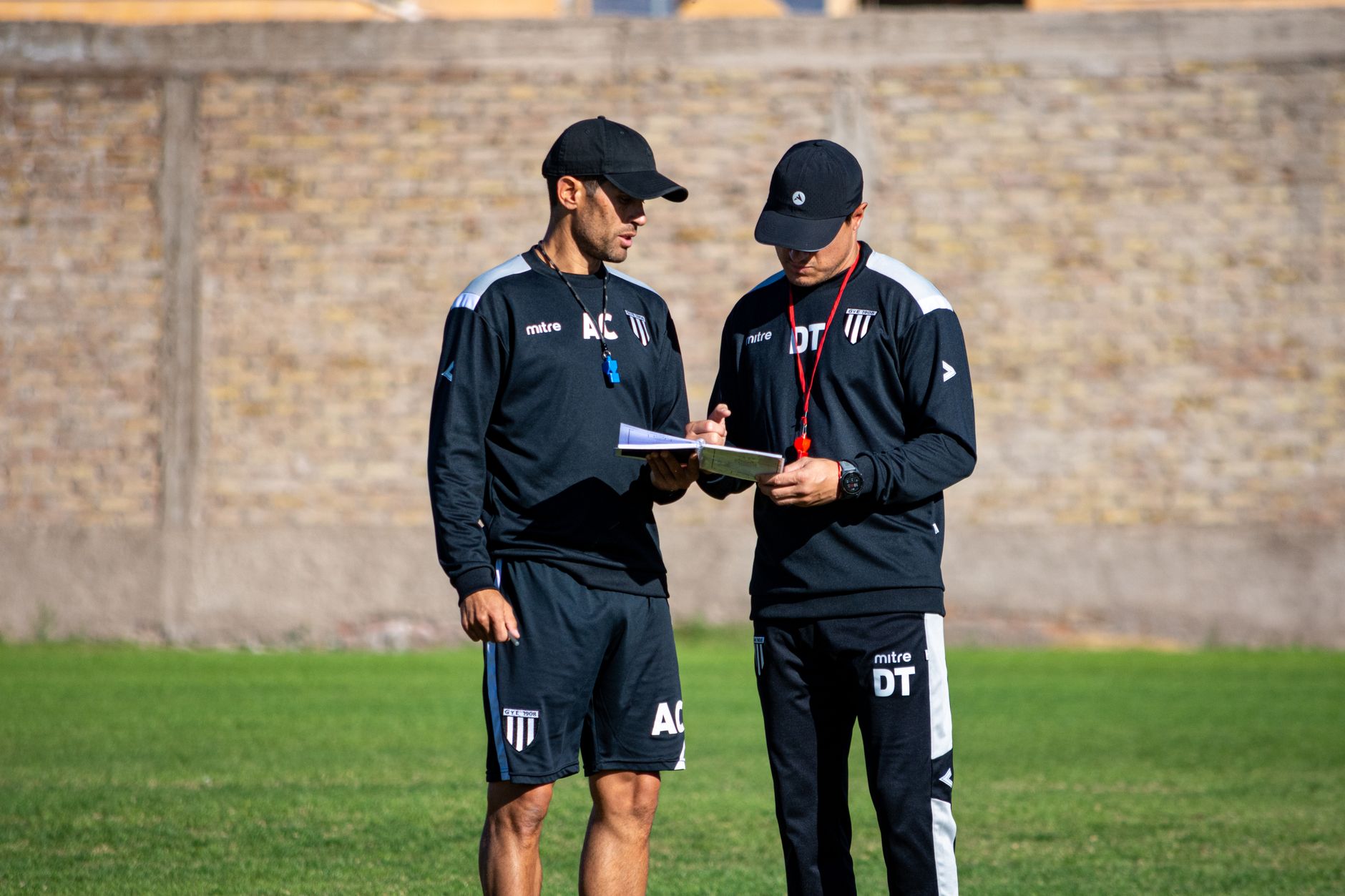
Photo by Franco Monsalvo on Pexels
Step 5: Verification
Verification means checking every important prediction input against current, authoritative information before drawing a conclusion. Use FIFA for schedules and regulations, official federation announcements for squads, reputable statistical providers for performance data, and local venue sources for stadium conditions. A prediction that cannot survive a late injury update or venue change was not particularly robust to begin with.
The verification process should happen twice. First, complete a preliminary review several days before kickoff, when likely line-ups, travel plans, and training reports become clearer. Second, repeat the check after official starting line-ups are released. A key attacker on the bench, a changed goalkeeper, or a surprise back-three formation can invalidate an otherwise careful pre-match assessment.
The FIFA World Cup regulations should be treated as the primary reference for competition rules. A sensible compliance-minded principle is simple: “official information should take precedence over unverified commentary.” That is not glamorous, but it is how expensive errors are avoided.
Before making any decision, record:
- The source and publication time of each major fact.
- The confirmed starting line-ups and formation.
- The team’s rest days and travel direction.
- Weather and pitch information where available.
- Whether the available odds or forecast still reflect the latest news.
- A maximum entertainment budget, if you choose to place a legal wager.
Football Compass covers gambling-related analysis, but responsible participation must remain the boundary. No model eliminates uncertainty, and no “inside pick” deserves unlimited confidence. Avoid chasing losses, never use money needed for rent or essentials, and check the legal requirements in your jurisdiction. In the United States, Canada, and Mexico, betting rules vary by state, province, and territory; readers should consult their local regulator before acting.
Would a final pre-match checklist be useful before you follow a fixture?
Troubleshooting common failures
Common failures in 2026 World Cup football analysis include using outdated fixtures, confusing local and viewer time zones, overvaluing friendly matches, ignoring squad rotation, and treating a tournament favourite as a guaranteed winner. These errors can be reduced by using dated sources, confirming line-ups, and comparing tactical evidence with the specific opponent rather than relying on reputation.
Failure 1: The fixture information does not match
Check FIFA’s official schedule and the host-city announcement, then confirm the local kickoff time. Time-zone errors are particularly easy across Vancouver, Mexico City, Kansas City, Miami, and Toronto, where a match may appear on a different calendar date for international viewers. Save the venue and local time separately.
Failure 2: A prediction changes after team news
That is not necessarily a failure; it may indicate that the analysis is responsive. Recalculate the tactical matchup when a striker, goalkeeper, or defensive midfielder is missing, and distinguish between a minor rotation change and an injury that alters the team’s entire structure.
Failure 3: Recent results look impressive but provide little evidence
Review the opponent quality, match state, and competition level. A 4–0 win over a weakened friendly opponent should not carry the same analytical weight as a narrow victory against a top-ranked team in a competitive fixture. Statistics become useful only after their context is understood.
Failure 4: The team dominates possession but creates little
Inspect shot quality, touches inside the penalty area, progressive passes, and counter-pressing losses. A team can hold 60% possession while producing sterile circulation, particularly when its opponent defends in a compact mid-block. In that situation, the better question is not “Who had the ball?” but “Who created the more repeatable danger?”
Failure 5: A bettor keeps increasing stakes after losses
Stop immediately, review the budget, and do not chase the previous result. A losing sequence does not make the next selection more likely to win, while emotional escalation can turn a modest entertainment activity into financial harm. If gambling stops feeling controlled, contact a local responsible-gambling service or regulator.
[Internal Link: responsible football betting guide]
The contrarian conclusion is fairly modest: the best 2026 World Cup football analysis may be less about predicting the champion in January and more about identifying when the information is still incomplete. Tournament football rewards preparation, but it also punishes false precision. Kansas City’s six matches, the 48-team format, 104 total fixtures, and the North American travel network create a competition where context should be updated repeatedly rather than announced once.
Photo by Sima Ghaffarzadeh on Pexels
Frequently Asked Questions
Q: What is the 2026 World Cup football format?
A: The 2026 FIFA World Cup features 48 teams divided into 12 groups of four, followed by a 32-team knockout stage. The top two teams from each group advance, along with the eight best third-placed teams. FIFA has scheduled 104 matches across Canada, Mexico, and the United States, making this the largest World Cup format to date. Group rankings can depend on points, goal difference, goals scored, and disciplinary or regulatory details where applicable.
Q: How can I start following the 2026 World Cup?
A: Start by saving FIFA’s official schedule, identifying your preferred teams, and tracking squad announcements before studying predictions. Then record each team’s venue, travel route, rest period, recent competitive results, and likely formation. Football Compass can supplement that process with match predictions, tactical explanations, player statistics, and tournament coverage. It is sensible to use at least one official source and one independent statistical source rather than relying on a single social-media account.
Q: What is the difference between the 2026 World Cup and Qatar 2022?
A: The principal difference is that 2026 includes 48 teams and 104 matches, while Qatar 2022 used 32 teams and 64 matches. The 2026 tournament is also hosted across Canada, Mexico, and the United States instead of one compact country. That creates more travel, more varied climates, and a wider range of venue conditions. The group-stage qualification route is also different because eight third-placed teams advance.
Q: Is Kansas City hosting 2026 World Cup matches?
A: Yes, Kansas City is one of the 16 official 2026 World Cup host cities and is scheduled to stage six matches at GEHA Field at Arrowhead Stadium. The wider regional programme includes the FIFA Fan Festival, public celebrations, food, entertainment, and cultural activities. Kansas City’s organising message focuses on welcoming international supporters, while analysts should separately evaluate each match’s teams, schedule, and tactical context.
Q: Why do 2026 World Cup predictions change after line-ups are announced?
A: Predictions change because starting line-ups can alter formations, pressing ability, defensive coverage, and attacking output. A missing goalkeeper or holding midfielder may have a greater structural effect than an absent rotational winger, depending on the team’s style. Compare the confirmed eleven with the expected formation, then reassess set pieces, transition defence, and substitutions. Late team news is one of the most important reasons to treat an early forecast as provisional.
Q: How much does it cost to follow or analyse the 2026 World Cup?
A: Following basic tournament information can be free through FIFA, national federations, host-city websites, and public reporting. Costs may arise from travel, tickets, streaming subscriptions, data services, or legal sports wagers, depending on location. There is no required minimum budget for Football Compass-style analysis: a spreadsheet, official sources, and consistent note-taking are enough to begin. If you gamble, set a fixed entertainment limit and never use essential household funds.
Q: What should I do if a World Cup betting prediction loses?
A: Accept the result, do not chase the loss, and review whether the original reasoning used accurate data and a realistic confidence level. A losing outcome does not automatically prove that the analysis was poor, because football contains substantial variance and single-match randomness. Stop increasing stakes, reassess your budget, and seek responsible-gambling support if betting no longer feels controlled. Football Compass insights should be treated as information, not a guarantee of profit.
The tournament will eventually provide its own answers, rather loudly, I imagine. Until then, the professional approach is to verify the fixture, understand the format, measure travel and tactical conditions, and keep predictions proportionate to the evidence. Football Compass will continue covering the 2026 World Cup with that deliberately unflashy standard.
For ongoing tournament analysis and match-focused updates, you are very welcome to begin here.