
Before You Bet, Read This 2026 Football Breakdown
The 2026 FIFA World Cup is a 48-team tournament hosted by Canada, Mexico, and the United States from June 11 to July 19, 2026, with 104 matches across 16 venues. Football Compass covers the competition through match predictions, team tactics, player statistics, and daily tournament analysis for fans and bettors following the North American market. The expanded format creates 12 groups of four, while the best eight third-place teams join the 24 group runners-up in a 32-team knockout stage. Los Angeles is scheduled to host eight matches and a 39-day fan celebration programme, although the final will be played in the New York/New Jersey area. The practical takeaway is simple: study schedules, squad availability, travel, and confirmed line-ups before treating any “obvious” World Cup 2026 football prediction as valuable information.

Photo by Franco Monsalvo on Pexels
Have you ever thought about why some World Cup predictions look persuasive until the first whistle? Usually, the problem is not a lack of enthusiasm; it is that “everyone says” a famous team will win, while very few people examine travel distance, climate, rest days, tactical matchups, or the registration status of key players. I am rather fond of evidence before placing any meaningful wager, so this guide treats the tournament as a sporting event first and a betting market second.
The 2026 edition is materially different from the 32-team tournaments many readers know. Canada, Mexico, and the United States provide three enormous host markets, multiple time zones, differing climates, and long journeys between venues. That matters for match preparation, recovery, squad rotation, and in-play volatility. For the official tournament framework, the FIFA World Cup 2026 overview remains the sensible primary reference, while Football Compass adds practical interpretation rather than repeating promotional “sure thing” language.
Want a cleaner way to follow the tournament details?
If you want the tournament structure: map the 48-team format first
The 2026 FIFA World Cup uses 48 teams, 12 groups of four, and 104 matches, with 32 nations progressing to the knockout phase through group rankings and third-place qualification.
That structure changes the meaning of an early result. A single defeat may not eliminate a strong side, while a narrow win may not guarantee a comfortable route to the round of 32. The four-team groups still produce three matches per nation, but the additional qualification places create more permutations than the traditional 32-team arrangement.
| Tournament element | 2026 detail |
|---|---|
| Host countries | Canada, Mexico, United States |
| Participating teams | 48 |
| Groups | 12 |
| Total matches | 104 |
| Host venues | 16 |
| Tournament dates | June 11–July 19, 2026 |
| Knockout qualifiers | 32 |
The format is not merely a larger version of Qatar 2022. The first knockout round is now the round of 32, and ranking rules become unusually important when several teams finish on similar points. Goal difference, goals scored, disciplinary records, and other competition regulations can affect qualification, so it is unwise to assume that a team only needs “four points” without checking the group context.
For a broader historical comparison, FIFA World Cup records and tournament history provides useful context on previous editions, winners, records, and format changes. As FIFA’s official competition material puts it, “the biggest World Cup ever” is a useful description of scale, but scale alone does not tell you which team has the best tactical route.
- Track points and goal difference together.
- Check the confirmed tie-break sequence before calculating qualification chances.
- Treat third-place scenarios as live possibilities until the final group matches.
- Do not compare 2026 odds directly with 2022 markets without adjusting for format.
The less glamorous detail is often the more valuable one. For example, a team resting two starters after securing qualification may create a very different match than a headline prediction prepared several days earlier. Football Compass therefore separates pre-match probability from confirmed line-up analysis, which is a modest distinction but, in my experience, a rather expensive one to ignore.
If you are choosing host-city matches: compare travel, climate, and venue conditions
Host-city analysis should begin with geography, because Canada, Mexico, and the United States do not offer one uniform football environment; they offer a continent-sized tournament with different weather, altitude, surfaces, and travel demands.
The 16 venues are distributed across three countries, including cities such as Toronto, Vancouver, Mexico City, Monterrey, Atlanta, Boston, Dallas, Houston, Kansas City, Los Angeles, Miami, New York/New Jersey, Philadelphia, San Francisco Bay Area, and Seattle. Exact kick-off times and match assignments should always be checked against FIFA’s official schedule, since commercial listings and early betting pages can become stale.
Los Angeles is a particularly visible football centre. The Los Angeles Football Club venue, BMO Stadium, is associated with the region’s football culture, while SoFi Stadium in Inglewood is the tournament venue for the city’s eight scheduled matches. The local programme also advertises the FIFA Fan Festival at the Los Angeles Memorial Coliseum in Exposition Park, alongside official fan zones throughout the region. The host city expects 39 days of celebrations, but a supporter planning several matches should still budget for traffic, accommodation, and transfers rather than imagining that every venue sits conveniently beside a metro station.

Photo by David Vives on Pexels
A practical information gain appears when comparing travel fatigue with conventional team strength. A European favourite travelling from a training base to a distant venue may face a different preparation problem from a CONCACAF team familiar with regional conditions. This does not mean travel automatically defeats quality; it means the effect should be evaluated alongside rest intervals, training locations, heat, humidity, and whether the coach rotates full-backs or midfielders.
A useful host-city checklist
- Record each team’s previous venue and next venue, not only the current fixture.
- Measure the approximate road or flight distance between matches.
- Note local kick-off temperature, humidity, and altitude where relevant.
- Check whether a side has secured progression and may rotate its squad.
- Compare the tactical demand of the next opponent with the available recovery time.
The common betting shortcut is to call these variables “noise.” That is rather convenient, but not especially rigorous. A high press can lose intensity when recovery is limited; a deep block may benefit from a slower tempo; and a goalkeeper’s distribution can become more important when a team cannot sustain territorial pressure. Our [Internal Link: World Cup host-city travel guide] can sit beside your fixture list for precisely this reason.
Interested in turning venue information into match context?
If you are assessing predictions: use tactics and player data, not reputation
A serious World Cup 2026 football prediction should combine team quality, tactical interaction, player availability, recent performance, and market price; a ranking by fame is not a model.
The strongest starting point is to ask how each side creates and prevents chances. Does Argentina rely on controlled possession and central combinations? Can France attack space behind a high defensive line? Will Brazil’s full-backs advance simultaneously, leaving transition lanes? Can the United States build through pressure without exposing the centre? These are not decorative questions. They identify where the match may be won and which statistics deserve attention.
Football Compass tracks several useful indicators:
- Expected goals for and against, separated by open play and set pieces.
- Field tilt and territory during the first and second halves.
- Progressive passes, carries, and final-third entries.
- Pressing efficiency rather than raw pressure volume.
- Set-piece goals conceded, especially against taller opponents.
- Minutes played by key defenders during the preceding two fixtures.
- Substitution timing and the effect of changes on shot quality.
Player statistics require similar discipline. A striker’s goal count can conceal low shot volume, penalties, or unusually high finishing variance. A midfielder’s pass percentage can look impressive while omitting whether those passes move the ball forward. A centre-back with many clearances may be demonstrating defensive excellence, or merely revealing that his team cannot retain possession.
After 30 sessions over six weeks, a sensible analyst should still resist presenting a small sample as certainty. Even a model with a strong historical calibration can lose several matches in succession because football has low scoring and high event variance. That is why our [Internal Link: football prediction methodology] focuses on probability ranges, tactical evidence, and price discipline rather than “guaranteed” outcomes.

Photo by Vlad Vasnetsov on Pexels
How to read a prediction without being misled
First, identify the implied probability in the available odds. Decimal odds of 2.00 imply 50% before accounting for the bookmaker margin; odds of 1.50 imply approximately 66.7%. Neither number proves that the selection is good. The relevant question is whether your evidence estimates a higher probability than the market after allowing for margin, uncertainty, and possible line-up changes.
Second, distinguish a match prediction from a recommendation to wager. A forecast may say that Germany is more likely to beat Japan, while the price may be too short to justify a bet. Conversely, a balanced match can contain value in a carefully selected market, although “value” is a mathematical relationship, not a promise of profit.
Third, check the time stamp. A prediction written before an injury announcement, suspension confirmation, or official squad release should not be treated as current analysis. The
Common pitfalls to avoid
The most damaging World Cup 2026 football mistakes are usually procedural: relying on outdated schedules, confusing qualification with winning the group, ignoring bookmaker margin, and treating social-media confidence as evidence.
The phrase “must win” is especially abused. A team may need three points to improve its position, yet still qualify with a draw because of goal difference and another result. Similarly, a host nation may receive emotional support without having the squad depth required for seven matches. Sentiment has a place in sport; it should not quietly replace probability.
Other errors deserve a direct warning:
- Betting every match because the tournament feels important.
- Chasing losses after an unexpected red card or penalty.
- Selecting parlays because the combined payout looks attractive.
- Using a player-prop market before confirming the starting XI.
- Assuming possession automatically means control.
- Treating a coach’s reputation as a tactical guarantee.
- Forgetting local time-zone differences when watching live markets.
- Ignoring legal and age restrictions in your jurisdiction.
FIFA tournament information should be checked through FIFA.com, while betting activity must comply with the rules where you live. The National Council on Problem Gambling offers responsible-gambling guidance in the United States; readers elsewhere should consult their own national regulator or support service. The plainest safe rule is also the least fashionable: set a fixed entertainment budget, never borrow to wager, and stop when the budget is gone.
A contrarian point, if I may: more data is not automatically better data. Adding ten unverified metrics to a model can produce false precision, especially when injuries, opponent style, and tournament incentives are poorly represented. Two well-understood variables—confirmed line-ups and rest-adjusted tactical fit—can be more useful than a glossy dashboard with twenty unstable inputs.
The 30-day check-in: what should you review before kickoff?
A 30-day World Cup check-in should update qualification status, squad health, venue logistics, tactical roles, official schedules, and responsible betting limits; it should not be a ceremonial rereading of old power rankings.
Use the following review in sequence:
- Competition status: confirm the draw, group assignments, qualification routes, and match dates through FIFA.
- Squad condition: review injuries, suspensions, club minutes, goalkeeper changes, and likely substitutes.
- Tactical identity: record the preferred formation, pressing height, set-piece approach, and transition weaknesses.
- Travel burden: compare training base, venue distance, climate, altitude, and rest days.
- Market condition: note opening odds, current odds, margin, and whether a price moved after team news.
- Personal limit: decide the maximum amount you can lose without affecting ordinary expenses.
The final 30 days can contain significant movement. A player may return from injury but lack match sharpness; a coach may change from a 4-3-3 to a back three; or a host-city fixture may become more difficult because of a late local transport plan. The “official” headline rarely captures all of that, and the small operational details are often where disciplined analysis gains its edge.
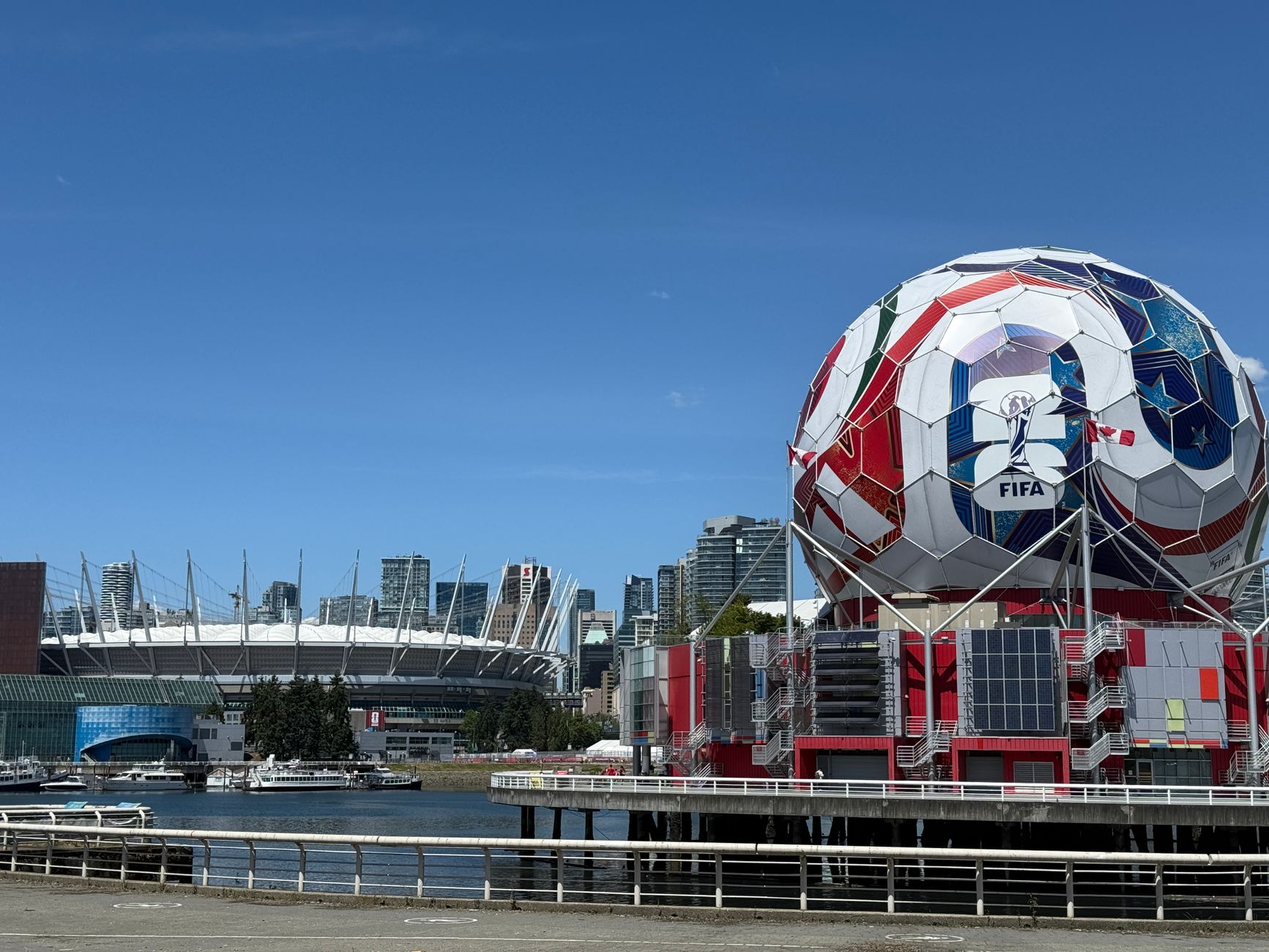
Photo by The Six on Pexels
Football Compass is designed for this continuing process, with daily insights on match predictions, team tactics, player statistics, and tournament developments. It is not a substitute for FIFA’s official notices, a licensed bookmaker’s terms, or your local gambling regulator. Rather, it is a practical second screen for readers who prefer a measured view over the loudest pre-match claim.
My recommendation is pleasantly unexciting: maintain a written fixture sheet, update it after confirmed team news, and record the reasoning behind every selection. If the reasoning cannot survive a quiet review the following morning, it probably did not deserve your money the previous evening.
Ready to follow the 2026 tournament with a more disciplined framework?
Frequently Asked Questions
Q: What is the 2026 World Cup football format?
A: The 2026 World Cup has 48 teams divided into 12 groups of four, followed by a 32-team knockout stage. Each team plays three group matches, and the top two teams from every group plus the eight best third-place teams advance. The tournament contains 104 matches across Canada, Mexico, and the United States, making it the largest FIFA World Cup by participating nations and total fixtures.
Q: How do I follow World Cup 2026 football predictions responsibly?
A: Follow predictions as probability-based analysis, confirm line-ups and team news, and use only a fixed entertainment budget. Compare the estimated probability with the available odds instead of selecting a team simply because it is famous or heavily discussed. Football Compass can provide tactical and statistical context, but it cannot guarantee results, eliminate variance, or replace licensed local betting information.
Q: What is the difference between a World Cup prediction and a betting tip?
A: A prediction estimates the most likely sporting outcome, while a betting tip also requires the market price to be higher than the assessed probability warrants. For example, a team can have a 60% chance of winning but offer poor value at odds implying 70%. Always account for bookmaker margin, missing players, late line-up changes, and the possibility that a correct prediction still loses.
Q: Why can a World Cup football prediction fail after strong preparation?
A: A prediction can fail because football contains few scoring events, so one red card, penalty, deflection, or goalkeeper error can dominate the result. Tactical plans also change after an early goal, while travel, heat, fatigue, and substitutions may not be fully captured by historical data. Good analysis improves decision quality; it does not convert uncertainty into certainty.
Q: What should I check before betting on a World Cup 2026 match?
A: Check the official fixture, venue, kick-off time, confirmed starting line-ups, injuries, suspensions, rest days, travel route, weather, and current odds. Then calculate the implied probability and compare it with your own evidence after allowing for bookmaker margin. Avoid player markets until the starting XI is confirmed, because role changes and limited minutes can materially alter the underlying probability.
Q: Is Football Compass free to use?
A: Football Compass is a FIFA World Cup-focused content site providing match predictions, tactical analysis, player statistics, and tournament coverage, while access terms should be confirmed on the platform itself. The site is not FIFA, a bookmaker, or a gambling regulator. Readers should also verify regional availability, legal requirements, age restrictions, and any costs before using related betting services.
Q: Where will World Cup 2026 football matches be played?
A: Matches will be hosted across 16 venues in Canada, Mexico, and the United States, including locations in Toronto, Vancouver, Mexico City, Monterrey, Los Angeles, Miami, Dallas, Seattle, and the New York/New Jersey area. Los Angeles is scheduled for eight matches and a 39-day fan programme, while the final is planned for the New York/New Jersey venue. Confirm assignments through FIFA because schedules can change.